
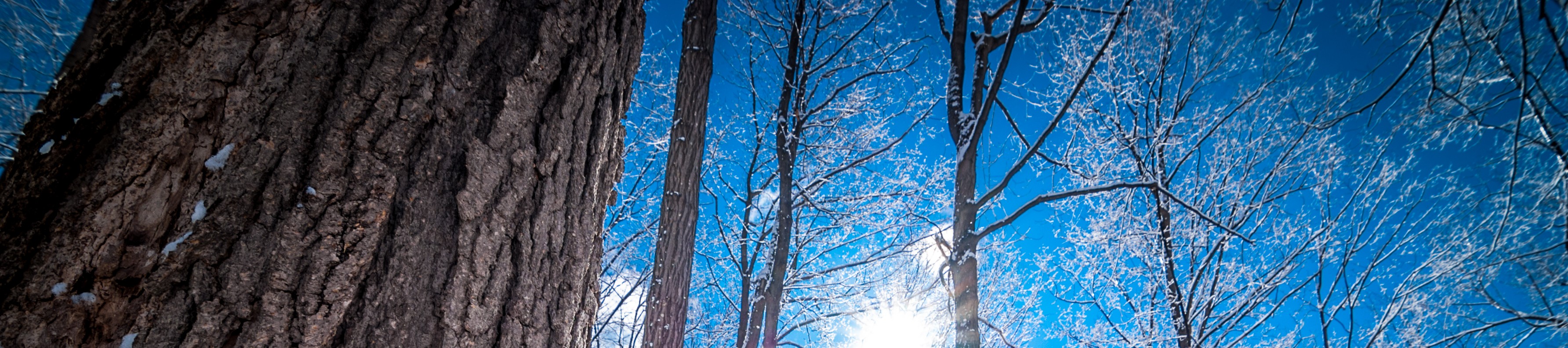
Taking Care of the Sugarbush
NURTURING A SUSTAINABLE MAPLE ECOSYSTEM
As you can imagine, maple foresters have every incentive to maintain a healthy forest environment.
They conserve and nurture the forests to maintain healthy trees at different stages of development so the forest renews itself naturally with limited intervention over decades and centuries. They practice careful and time-tested harvesting practices that respect the environment and ensure longevity of our forests. For example, maple tree tapping is done very carefully using scientifically verified and tested methods so that the tree is not harmed.
Maple trees have a very long growth and natural life cycle and can live up to 400 years, and they need from 40 to 80 years of growth before they can even be tapped - maple producers have a long-term view of things. Maple syrup producers are typically smaller, entrepreneurial businesses across the maple producing regions of North America with maple producer families span four, five, even six generations and have trees that are much older, so these folks are intimately connected to the land and its forest.
Maple syrup producers’ relationship with nature and maple trees is uniquely rewarding because they make a living from the trees without diminishing them.
The conservation of large swaths of forests for maple syrup production prevents cutting the forest for other uses (deforestation) and supports a traditional economy and way of life that retains the essential ecological functions of forests, which is part of the favorable sustainability picture for maple syrup.

BENEFITS OF SUSTAINABLE MAPLE FORESTS
Healthy forests provide important ecological benefits while supporting recreation, wildlife, and sustainable economic activity.
The conservation of large swaths of forests for maple syrup production prevents cutting the forest which retains the essential ecological functions of forests and provides a habitat for a variety of wildlife species. Maple stands also filter pollutants from the air and water, preserve soil, prevent disease, contribute to biological control and promote plant and vegetation reproduction.
Maple producers are essentially forest farmers, which means they are careful and dedicated stewards of the land.
Preserving forests to produce maple syrup precludes cutting the forest for other uses and promotes the conservation of forest and woodlands for sustainable economic activities. Since maple syrup trees need 40 to 80 years of growth before they can be tapped, healthy trees at different stages of development are needed for the forest to renew itself naturally and perpetually with limited intervention.
Nurturing a Sustainable Maple Ecosystem
The relationship between maple producers and their forests is unique. Producers are able to earn a livelihood from their trees while maintaining the health and productivity of the forest itself. As a result, they have every incentive to conserve and nurture healthy maple stands for future generations.
Maple producers use responsible, science-based management practices to support long-term forest health and sustainability. Forest management activities are conducted carefully to maintain healthy trees, encourage natural regeneration, and promote the longevity of the sugarbush. Maple tree tapping is performed using established and scientifically validated practices that allow trees to remain healthy and productive for decades.
The long-term success of the maple industry depends on healthy forests, making environmental stewardship an essential part of maple production across North America.
RESILIENCE AND HOPE FOR THE FUTURE OF MAPLE
Sugar makers have a long history of adapting to the natural system of their forest.
Over the past 20 years, maple production has increased tremendously. This growth is due to increasing demand for maple products, a corresponding increase in the number of taps, and the adoption of new sugaring technologies that have improved sap yields, including vacuum systems, enhanced tap designs, and more efficient tubing systems.
Despite changing weather patterns and other environmental challenges, the maple industry remains optimistic about the future. Through responsible forest stewardship, continued innovation, scientific research, and sustainable land management practices, maple producers are helping to ensure that healthy maple forests remain productive for generations to come.
The International Maple Syrup Institute and its members are involved in many initiatives that help maple production remain sustainable and financially viable in the face of new challenges. We are committed to supporting healthy forests that continue to provide opportunities for maple-producing landowners and lessors while maintaining the environmental, economic, and social benefits that maple forests provide.
Your interest in maple products helps support forest conservation, wildlife habitat, sustainable working landscapes, and the thousands of maple producers, workers, and businesses that contribute to rural economies across North America.

INNOVATIVE STRATEGIES for sustainable MAPLE SYRUP PRODUCTION
The IMSI and its members are continually investing in research, innovation, and improved production practices to support the long-term sustainability of the maple industry.
The maple sector actively supports research initiatives that advance our understanding of maple production and help producers adopt new technologies, improve efficiency, and implement best practices that strengthen environmental and economic sustainability.
The success of our industry depends on the responsible management of forest ecosystems, including maple stands. Through ongoing stewardship, research, and innovation, maple producers are helping to maintain healthy forests, support biodiversity, and ensure that maple production remains viable for future generations.